The Bureau of Labor Statistics releases the Consumer Price Index and the monthly jobs report at 8:30 a.m. ET, an hour before the stock market opens, so ES and NQ futures take the first reaction. The first minutes are often fast and two-sided while traders compare the numbers with forecasts and reprice interest-rate expectations. A practical plan is to be flat or small into the release, let the first range form, and trade the retest of a level you marked before 8:30.
This guide explains why the reaction happens in futures first, what the market reads in each report, what the first minutes tend to look like, and how to size a trade for a report morning. It builds on our ES pre-market analysis routine, which covers the rest of the morning before the open.
Why ES and NQ react before the stock market
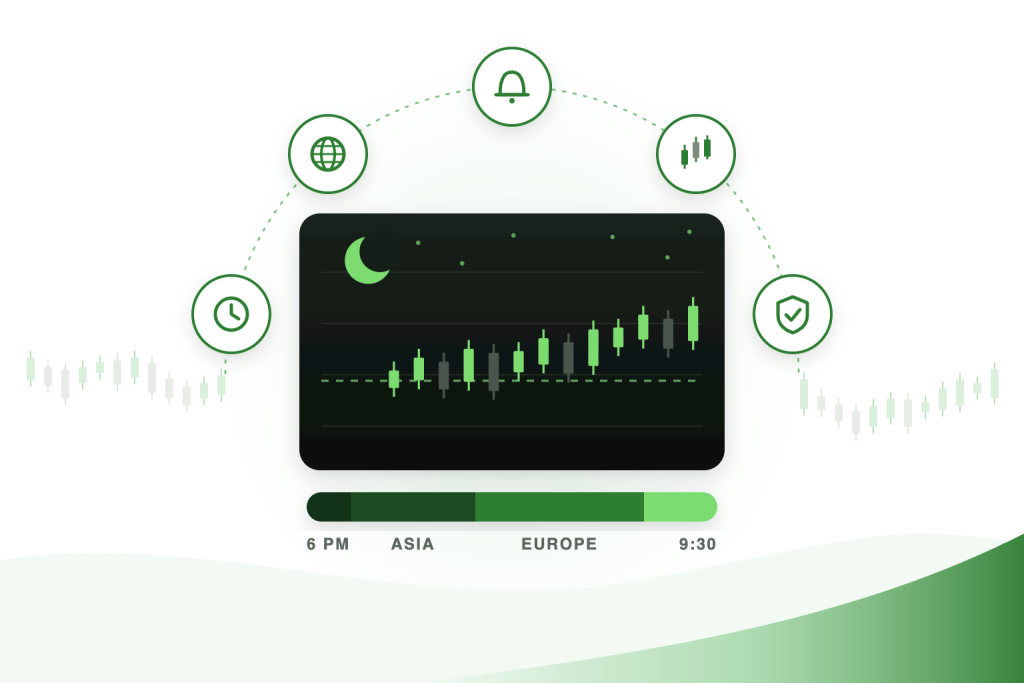
CME Globex trades E-mini S&P 500 and E-mini Nasdaq-100 futures almost around the clock, from Sunday 6:00 p.m. to Friday 5:00 p.m. ET with a one-hour daily break (CME Group, E-mini S&P 500 contract specs). The stocks in those indexes do not open for regular trading until 9:30 a.m. ET (NYSE hours and calendars).
The BLS publishes its scheduled releases at 8:30 a.m. ET (BLS release schedule). For that hour, futures are the main place where traders can act on the news with size, so ES and NQ do the price discovery and the cash market opens wherever futures have taken it, plus or minus whatever changes in the next hour.
What the market reads in each report
The Consumer Price Index
CPI measures the change in prices paid by urban consumers for a basket of goods and services (BLS, Consumer Price Index). Traders look first at the month-over-month change in headline CPI and in core CPI, which leaves out food and energy, then at the year-over-year rates. What moves futures is not the number itself but the gap between the number and the consensus forecast. A hotter print than expected usually raises the odds of tighter Federal Reserve policy; a cooler one lowers them. Index futures react to that change in rate expectations.
The Employment Situation report
The jobs report, which the BLS calls the Employment Situation, usually comes out on a Friday early in the month (BLS, CES release dates). Its headline numbers are the change in nonfarm payrolls and the unemployment rate. Average hourly earnings matter too, because wage growth feeds into inflation, and the revisions to the previous two months can change the story as much as the new month. A strong report can lift stocks on growth or push them down on rate fears, depending on what the market is worried about that month, so read the reaction, not just the release.
Other 8:30 releases
The Producer Price Index also comes out at 8:30 a.m. ET from the BLS. Other agencies publish retail sales, GDP and weekly jobless claims at the same time of day. None of them is as reliably market-moving as CPI and payrolls, but any of them can move ES and NQ when the number surprises. Check an economic calendar each evening for the next morning.
Why ES and NQ can react differently
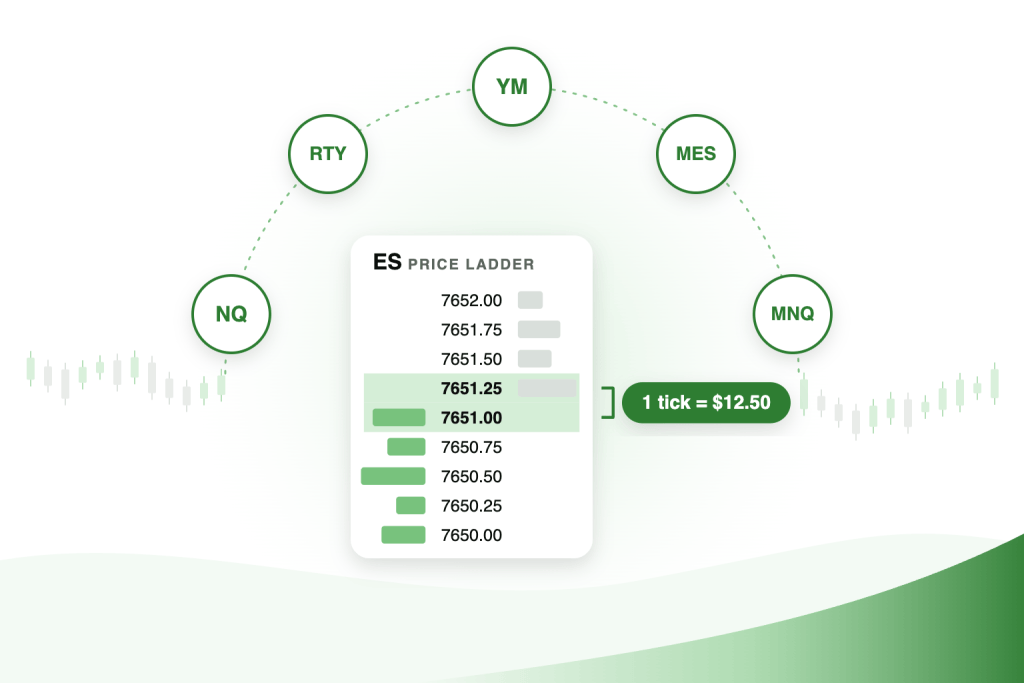
NQ tracks the Nasdaq-100, which leans heavily toward large technology and growth companies. Many traders see NQ move further in percentage terms when a report shifts interest-rate expectations, because the value of those companies rests more on earnings expected years from now. That is a tendency, not a rule. Compare the two by what a move costs you per contract, not by points: one NQ is $20 per point and one ES is $50 per point (CME Group, E-mini Nasdaq-100 specs). Our comparison of NQ and ES futures covers the differences in more depth.
What the first minutes look like
- The book thins before 8:30. Many traders pull resting orders in the last minutes before a release, so the first trades after it can jump several ticks at once.
- The first move can reverse. An initial spike on the headline number can unwind once traders read the details, such as core CPI or revisions to payrolls.
- Stops get run. Stops clustered above the overnight high or below the overnight low are an easy target in a fast market, and they can fill well beyond their price.
- Exchange safeguards apply. CME uses price limits and short pauses for U.S. equity index futures outside regular hours; the current levels are in its price limits FAQ.
A plan for report mornings
Before 8:30
- Confirm the release and its time on the BLS schedule, and note the consensus forecast.
- Mark your levels: the prior regular session’s high, low and close, the overnight high and low, and any supply and demand zones near current price.
- Decide whether you will be flat into the number or hold a reduced position with a stop that you can afford to see slip.
- Decide what happens to any resting orders. A limit order left in the book at 8:29 can fill in the spike and leave you in a trade you did not choose.
8:30 to about 8:35
Do not chase the first candle. Watch which levels price runs through and which ones it rejects. The first few minutes tell you where the urgent orders were; they do not yet tell you where price will settle.
About 8:35 to 9:30
Look for price to come back to a level that held in the first move: the overnight high or low, the prior day’s close, or a zone you marked the night before. A retest that holds gives you a defined place for a stop. Size for the full slippage buffer, using the worked example below.
9:30 and the second wave
The cash open brings stock-market volume and often a second move, as traders who could not act in futures respond to the report through stocks and options. If ES or NQ is set to open well away from the prior close, the open becomes a gap setup; our guide to trading NQ gaps at the open covers it.
Sizing for a report morning
Blueville’s futures setups keep the same 5-point stop on report mornings. What changes is the entry: in a fast market, an entry is more likely to use the whole slippage buffer added to its limit price, up to 3 points, so count the full 8 points of risk and size for it. Micro E-mini contracts are one-tenth the size of the E-minis: MES is $5 per point and MNQ $2 per point (CME Group, Micro E-mini S&P 500 specs; Micro E-mini Nasdaq-100 specs).
Say you trade a $50,000 account and normally risk 1%, $500, per trade. On a CPI or payrolls morning you cut that to $400 and count the full 8 points:
- NQ. One NQ risks 8 × $20 = $160, so 2 NQ fit ($320), the same position as 20 MNQ.
- ES. One ES risks 8 × $50 = $400, so 1 ES fits ($400), or 10 MES.
The stop doesn’t move to make room for a bigger position; the contract count does the adjusting. Our futures position size calculator does the arithmetic for any account. Our guide to position sizing and stop losses covers the same principle for options.
Common mistakes on report mornings
- Holding full size into the number because the trade is working at 8:25.
- Trading the headline before reading core CPI or the payroll revisions.
- Entering with market orders in the first seconds, when the spread can be several ticks wide.
- Forgetting the second wave at 9:30 and treating the 8:30 move as the whole day.
How Blueville handles report mornings
Blueville Capital’s Futures Add-On sends live futures alerts during the overnight and morning sessions, which is where report reactions happen, with setup reviews and text support while the session runs. It is booked per session and open to members and non-members, and Blueville suggests a portfolio of $25,000 or more, with $50,000 or more ideal.
Frequently asked questions
What time are CPI and the jobs report released?
8:30 a.m. Eastern time. The BLS posts the full year’s dates on its release schedule, and dates can change, so check it each month.
Why do ES and NQ move before the stock market opens?
Because they trade on CME Globex almost 24 hours a day, five days a week, while regular stock trading starts at 9:30 a.m. ET. At 8:30 a.m., index futures are the most direct way to act on the news.
Should I hold a futures position through CPI?
That depends on your plan and your account, and this article is not personal advice. If you do hold, size the position so that a move well past your stop, plus slippage, still fits your risk budget. Many short-term traders choose to be flat at 8:30 and trade the reaction instead.
Which report moves futures more, CPI or payrolls?
It changes with the market’s focus. When inflation is the main worry, CPI tends to matter most; when the economy’s strength is in question, payrolls can take over. Watch which report the market reacted to most in recent months.
Conclusion
CPI and payrolls land at 8:30 a.m. ET, while the stock market is still closed, so ES and NQ take the first and often the sharpest reaction. Treat those mornings as their own event: know the time and the forecast, mark your levels, come in flat or small, let the first range form, and count the full slippage buffer when you size. If you want live setups through report mornings, with someone reviewing them as they happen, see the Futures Add-On on our Services page.
Educational content only, not investment advice. Futures trading involves substantial risk of loss and is not suitable for every investor. Blueville Capital LLC is not a registered broker or financial advisor.