What Is a Trade Alert Service? How to Evaluate One Before You Pay
Index Options Trading ·

Introduction
There are hundreds of options trade alert services competing for your subscription dollar right now. Some are run by genuinely skilled traders with years of verified results. Others are nothing but bold performance claims, cherry-picked screenshots, and flashy marketing designed to separate you from your money before you know what hit you.
The difference between the two is not always obvious — especially when you are new to options trading and do not yet have the experience to spot the red flags.
This guide explains exactly what a trade alert service is, how they work in practice, and the seven criteria every trader should evaluate before handing over a credit card. By the end, you will know precisely what separates a legitimate, high-value service from one that will waste your time and money.
What Is a Trade Alert Service?
A trade alert service is a subscription-based product where an experienced trader or trading team sends members specific trade recommendations in real time. A typical alert includes:
- The instrument to trade (e.g. SPX calls, RUT puts, SPY options)
- The specific strike price and expiration date
- The entry price or price range
- A profit target
- An invalidation level or stop area
- The reasoning behind the trade setup
Alerts are delivered through various channels — email, SMS, a private Discord or Slack channel, a members-only web dashboard, or a combination of these. The best services deliver alerts fast enough that members can realistically execute at or near the suggested entry price.
Trade alert services exist across many asset classes, but options alert services — particularly those focused on index options like SPX, RUT, SPY, and IWM — are among the most popular because of the leverage and daily expiration cycles that options provide.
How Trade Alerts Work in Practice
When a new alert is issued, here is the typical flow:
- The lead trader identifies a setup that meets their criteria
- The alert is sent to members via the delivery channel (Discord, email, SMS, etc.)
- Members review the alert and decide whether to take the trade
- The lead trader may send updates as the trade develops — scaling, adjusting targets, or noting if the setup is invalidated
- A final update is sent when the trade is closed, with the outcome
The key word in step 3 is decide. A good trade alert service is not a copy-trading bot. You are not obligated to take every alert, and the best services make this clear. The goal is to give you high-probability setups grounded in a defined methodology — not to make trading decisions for you.
This distinction matters because it separates services that aim to educate and empower you from those that create dependency and keep you subscribed indefinitely without improving your skills.
The 7 Criteria to Evaluate Before You Pay
1. Verified, Transparent Trade History
This is the most important filter. Any legitimate trade alert service should publish a complete, unedited trade history — every alert, every outcome, wins and losses.
Be extremely skeptical of services that only show winning trades, post screenshots of profits without context, or claim win rates above 85–90% without independent verification. Real traders have losing trades. A service that never shows losses is either cherry-picking results or fabricating them.
What you want to see:
- A complete trade log with dates, entry prices, targets, and outcomes
- Clearly stated win rate based on the full history
- No selective editing of losing trades out of the record
At Blueville Capital, the full Index and Stock trade histories are published and accessible to anyone reviewing the service — before you ever subscribe. blueville.capital
2. A Defined, Repeatable Methodology
Can the trader clearly explain why they take the trades they take? Is there a repeatable framework — a set of rules and criteria that generate consistent setups?
Services with a defined methodology produce setups you can learn from. Over time, you start to recognize the patterns yourself. Services without a clear methodology produce random-looking alerts with vague justifications — and you never develop any real understanding of what you are following.
Supply and demand zone analysis, for example, is a defined methodology. It gives you specific rules for identifying zones, specific criteria for entry confirmation, and specific targets based on the next zone in the opposite direction. Every alert can be traced back to the framework.
3. Alert Delivery Speed and Reliability
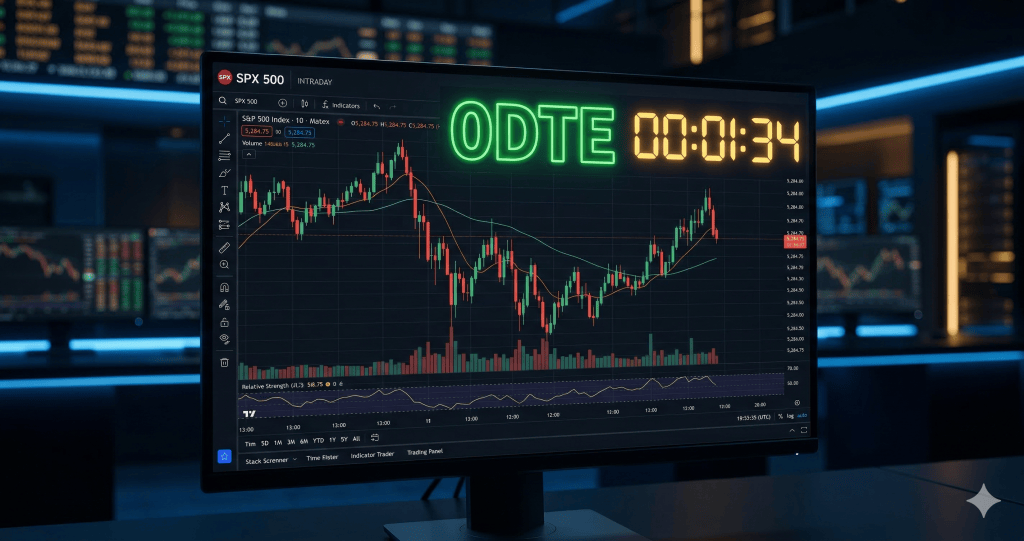
An alert is only useful if you can execute at or near the suggested entry. Index options — especially 0DTE and 1DTE contracts — can move extremely fast. An alert that arrives 10 minutes after the entry window has closed is worse than no alert at all, because it creates pressure to chase the trade.
Before subscribing, ask:
- How are alerts delivered? (Discord tends to be fastest; email is often too slow for 0DTE)
- Is there a track record of members successfully executing at the alerted prices?
- Are there update alerts when conditions change, or is it a one-and-done notification?
4. Risk Management Guidance
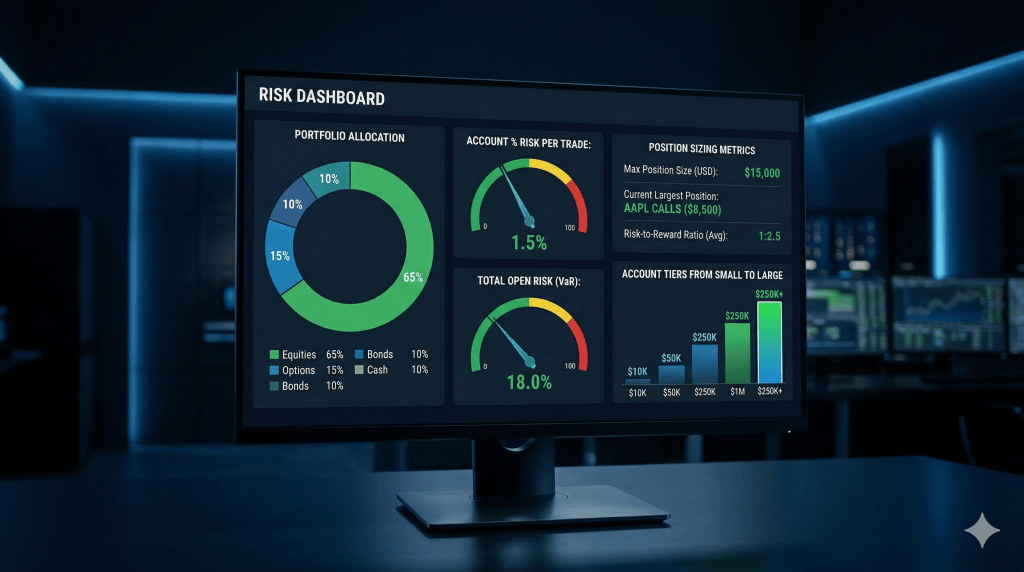
A good trade alert service does not just tell you what to buy — it tells you how much to risk, where to place your stop, and what invalidates the setup. Without this information, even a high win-rate service can blow up a poorly sized account on a single losing trade.
Look for:
- Clear invalidation levels or stop areas on every alert
- Guidance on position sizing relative to account size
- Education on how to manage the trade after entry — scaling out, adjusting stops, taking partial profits
Services that issue alerts with no risk guidance are asking you to make critical position management decisions without giving you the information you need to make them correctly.
5. Realistic Performance Claims
The options alert service industry is rife with unrealistic claims. “500% returns last month.” “95% win rate guaranteed.” “Turn USD 5,000 into USD 50,000 in 60 days.”
These claims are almost always misleading. They typically involve cherry-picked trades, percentage gains on tiny fractions of a position, or single-contract examples that cannot be replicated with a real account and real position sizes.
Legitimate services focus on:
- Consistent, repeatable percentage gains per trade (e.g. targeting 50%+ per setup)
- A realistic win rate in the 55–70% range with favorable risk/reward ratios
- Compounding growth over months and years, not overnight transformation
If the performance claims sound too good to be true, they almost certainly are. According to stockanalysis.com, your first filter should always be credibility — how long has the service been running and is there a verifiable track record? stockanalysis.com
6. Community and Support Quality
The difference between a good and great trade alert service often comes down to what happens outside the alerts themselves. Is there a community of other traders you can learn from? Can you ask questions and get real answers? Is there access to educational content that helps you understand the methodology?
For traders who are still learning, community quality and access to the lead trader are often more valuable than the alerts themselves. A one-on-one mentorship option — where you can work through the methodology directly with an experienced trader — is a significant differentiator.
Ask:
- Is there a community channel (Discord, private group) where members interact?
- Can you ask questions about specific alerts or setups?
- Is there one-on-one access to the lead trader or mentor, and at what price?
7. Pricing Transparency and Cancellation Terms
Before subscribing, make sure you understand exactly what you are paying for and what it takes to cancel. Some services make cancellation deliberately difficult, auto-renew without clear notice, or charge significant fees to access the most valuable content after drawing you in with a low introductory price.
Look for:
- Clear, published pricing for each membership tier
- Straightforward cancellation terms with no hidden fees
- A free trial, money-back guarantee, or at minimum a transparent refund policy
- No aggressive upselling once you are subscribed
Red Flags to Watch For
Beyond the seven criteria above, here are specific warning signs that a trade alert service is not worth your money:
- No published trade history — or a trade history that only shows winners
- Vague or constantly changing methodology — “I just feel the market” is not a strategy
- Alerts that arrive after the move — consistently unusable entry prices
- No risk management guidance — alerts with no stop or invalidation level
- Extreme win rate claims — anything consistently above 85% should be heavily scrutinized
- High-pressure sales tactics — countdown timers, “limited spots available,” aggressive DMs
- Anonymous lead trader — no verifiable track record or background
- No community or support — you pay your subscription and receive alerts with zero context or interaction
What a Legitimate Trade Alert Service Looks Like
For contrast, here is what a well-run, legitimate options trade alert service provides:
- A complete, unedited trade history covering wins and losses
- A clearly defined methodology that generates repeatable setups
- Fast alert delivery with specific entry areas, targets, and invalidation levels
- Explicit risk management guidance tied to account size
- Realistic performance targets (e.g. 50%+ per trade, not 500% per month)
- A community of active traders and direct access to the lead trader
- Transparent pricing with clear cancellation terms
- Educational content that makes you a better, more independent trader over time
How Blueville Capital Measures Up
Blueville Capital was built around the belief that a trade alert service should make you a better trader — not create dependency on someone else’s calls.
Every alert we issue is tied to a specific supply and demand zone setup on SPX, RUT, SPY, or IWM — with a defined entry area, a target, and a clear invalidation level. Our full trade history is published transparently so you can evaluate our results before you ever subscribe.
Membership tiers are designed to match your account size and experience level:
- Base Membership — designed for traders with USD 5,000+ portfolios who want daily index options setups
- Regular and Premium Memberships — expanded access and support for growing accounts
- Preferred Membership — full access for serious traders with USD 200,000+ in capital
- One-on-One Mentorship — four two-hour video sessions covering the full supply and demand methodology, position sizing, and trade management from scratch
We do not promise overnight transformation. We offer a defined methodology, transparent results, and a community of traders who are serious about compounding consistent gains over time.
👉 blueville.capital
FAQs
Q: What is a trade alert service? A: A trade alert service is a subscription product where an experienced trader sends members specific trade recommendations in real time — including the instrument, strike, expiration, entry price, target, and reasoning behind the setup. Members can then decide whether to take the trade in their own account.
Q: Are options trade alert services worth it? A: They can be — but only if the service has a verified track record, a defined methodology, fast alert delivery, and genuine risk management guidance. Services without these elements are rarely worth the subscription cost. Always review the full trade history before subscribing.
Q: How do I know if a trade alert service is legitimate? A: Look for a complete, unedited trade history covering wins and losses, a clearly explained methodology, realistic performance claims, and transparent pricing. Be skeptical of services that only show winning trades, claim win rates above 85–90%, or use high-pressure sales tactics.
Q: What should a trade alert include? A: A well-constructed trade alert should include the instrument and contract details (ticker, strike, expiration), entry price or range, profit target, invalidation level or stop area, and a brief explanation of the setup rationale. Alerts without risk management guidance are incomplete.
Q: How fast do trade alerts need to be? A: For index options — especially 0DTE and 1DTE contracts — alert delivery needs to be very fast. Discord is typically the fastest delivery channel. Email is often too slow for short-dated options trades. Before subscribing, confirm that members can realistically execute at or near the alerted entry prices.
Q: What is the difference between a trade alert service and copy trading? A: Copy trading automatically mirrors another trader’s positions in your account without any decision-making on your part. A trade alert service sends you a recommendation that you choose whether to act on. The best alert services also explain the reasoning behind each trade, helping you build your own skills over time rather than creating permanent dependency.
Q: Does Blueville Capital publish its trade history? A: Yes. Blueville Capital publishes its full Index and Stock trade histories so prospective members can evaluate performance before subscribing. No cherry-picked results — the complete record is available at blueville.capital.
Conclusion
The options trade alert service industry has no shortage of noise. Finding a legitimate service requires cutting through the performance claims and marketing hype to evaluate the things that actually matter — verified results, a defined methodology, fast delivery, and genuine risk management guidance.
Use the seven criteria in this guide as your checklist before subscribing to any service. And if you are looking for a starting point that meets all seven, Blueville Capital’s published trade history and transparent membership structure are worth reviewing.
👉 blueville.capital
Disclaimer: Options trading involves significant financial risk and is not suitable for all investors. Past performance does not guarantee future results. This article is for educational purposes only and does not constitute financial or investment advice. Always conduct your own due diligence and consult a licensed financial advisor before making trading or investment decisions.