0DTE Options Trading: What It Is, the Risks, and Whether It’s Right for You
Index Options Trading ·
Introduction
Zero days to expiration options — 0DTE for short — have gone from a niche trading tactic to one of the most dominant forces in the options market. By early 2026, 0DTE contracts account for approximately 59% of all SPX options volume on any given trading day. ainvest.com
That number alone tells you something important: this is not a fringe strategy anymore. Retail traders, prop desks, and institutional players are all active in the 0DTE market simultaneously — which makes it both more liquid and more competitive than ever before.
But explosive popularity does not mean 0DTE options are suitable for everyone. They expire the same day they are traded. There is no next session to recover. No weekend to regroup. Just a ticking clock and real money on the line from open to close.
This guide explains exactly what 0DTE options are, how they work mechanically, what the genuine risks are, and the honest answer to whether you should be trading them right now.
What Are 0DTE Options?
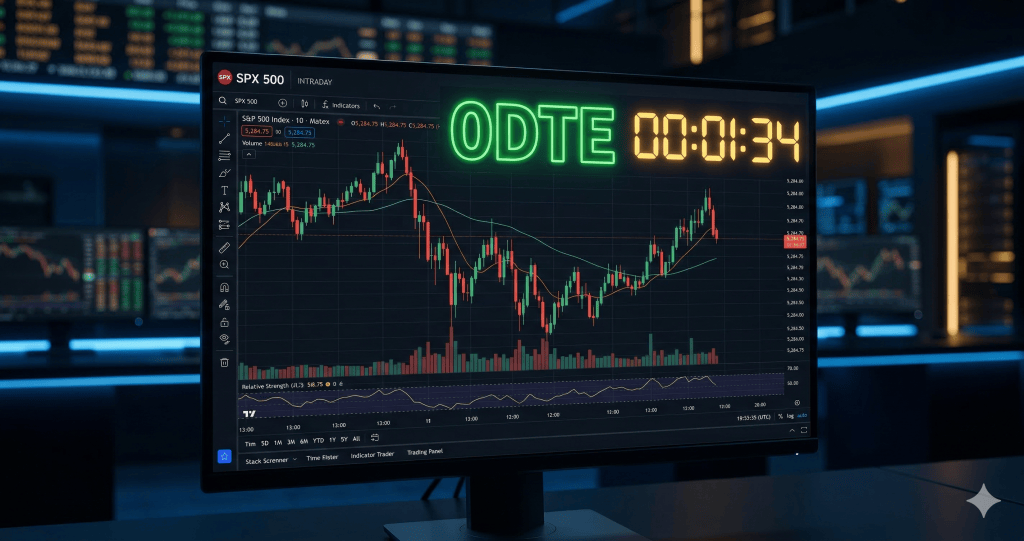
0DTE stands for zero days to expiration. A 0DTE option is any options contract that expires on the same calendar day it is traded. You open the position during market hours and the contract either pays off or expires worthless at the closing bell — typically 4:00 PM EST for equity index options.
On SPX, 0DTE options are available every trading day of the week. CBOE introduced Monday and Wednesday expirations in addition to the traditional Friday close, and by 2026 SPX now offers near-continuous daily expiration cycles. ainvest.com
RUT (Russell 2000 Index options) has also expanded its expiration schedule, with CBOE extending near-24/7 trading access to RUT options in 2026 — making both major index instruments accessible for 0DTE strategies across more sessions than ever before.
How 0DTE Options Work Mechanically
Understanding the mechanics is non-negotiable before you place a single 0DTE trade.
Gamma: The Engine of 0DTE
Gamma measures how fast an option’s delta (its sensitivity to price movement) changes as the underlying moves. On expiration day, gamma reaches its maximum value — particularly for near-the-money options.
What this means practically: a small move in SPX can produce an extremely large percentage move in the option’s price. A 10-point SPX move might produce a 100%+ gain on a near-the-money 0DTE call that was purchased earlier in the session. That same 10-point move in the wrong direction can wipe out most or all of the premium paid.
This gamma amplification is why 0DTE options attract traders looking for large percentage gains in a short timeframe. It is also why they can destroy accounts that are not managed carefully.
Theta: Your Constant Enemy as a Buyer
Theta measures time decay — the rate at which an option loses value as expiration approaches. On a 0DTE contract, theta decay is extreme. Every hour that passes without a favorable price move erodes your option’s value. By mid-afternoon on an expiration day, an out-of-the-money 0DTE option that has not moved in your favor may have lost 50–70% of its value simply from time passing.
This creates a very different dynamic from weekly or monthly options trading. You cannot wait out an adverse move. You cannot “give it more time.” Either the market moves in your direction quickly or you manage your position before it expires worthless.
The Speed Requirement
0DTE trading requires fast decision-making. Entries, adjustments, and exits all happen within a single trading session. A setup that looks ideal at 10:00 AM can be completely invalidated by 11:30 AM if the market moves against your thesis. Unlike swing trading or even weekly options plays, there is no patience option on a 0DTE trade — you manage it actively or you accept the outcome at 4:00 PM.
The Real Risks of 0DTE Options
1. Rapid Total Loss
The most obvious risk: your entire premium investment can go to zero within hours. With weekly or monthly options, you often have time to exit a losing trade with something left. On a 0DTE that expires out of the money, every dollar of premium paid is gone. This happens regularly even to experienced traders — it is an inherent feature of the product, not an edge case.
2. Psychological Pressure
The compressed timeframe of 0DTE trading creates significant psychological pressure. Watching a position swing 50% against you in 20 minutes, then recover, then reverse again — and making clear-headed decisions throughout — requires a level of emotional discipline that takes considerable experience to develop. Many traders discover their psychological limits the hard way on 0DTE positions.
3. Overtrading
Because 0DTE options are available every trading day and premiums are relatively low in dollar terms, it is easy to overtrade. Taking three or four marginal setups a day because “it’s only USD 200 per trade” is a fast path to USD 200–400 in daily losses that compound quickly across a month. According to a March 2026 guide on 0DTE strategies, the biggest mistake most traders make is not being wrong about direction — it is drowning in complexity and overtrading marginal setups. medium.com
4. Liquidity Risk During High-Impact Events
During major macroeconomic events — Federal Reserve announcements, CPI prints, jobs reports — 0DTE options spreads can widen significantly as market makers pull liquidity or reprice rapidly. Entering or exiting a position during these windows can result in significant slippage. This is a real operational risk that many 0DTE traders underestimate until they experience it firsthand. ainvest.com
5. No Recovery Window
With weekly or monthly options, a bad day can be recovered over the remaining life of the contract. With 0DTE, each trading day is a completely independent event. A losing day cannot be recovered by the same position. This means consistency of process — not occasional wins — is what determines long-term profitability.
What You Need Before Trading 0DTE Options
Before trading 0DTE options on SPX or any index, you should have the following firmly in place:
A Mastery of Weekly Options First
0DTE is not a starting point. It is an advanced application of options mechanics that requires a solid foundation. If you cannot consistently manage a weekly options position — sizing it correctly, exiting efficiently, and reading price action at key levels — you are not ready for 0DTE. The mechanics are the same but the margin for error is dramatically smaller.
A Defined Methodology
Successful 0DTE traders do not wing it. They have a specific, repeatable framework that tells them where to enter, what confirmation they need, where their stop is, and what their target looks like — before the trade is placed. Supply and demand zone analysis is one such framework. It gives you specific price levels to watch, clear confirmation criteria, and defined targets based on the next zone in the opposing direction. gammaedge.us
Without a defined methodology, 0DTE trading quickly becomes reactive, emotional, and expensive.
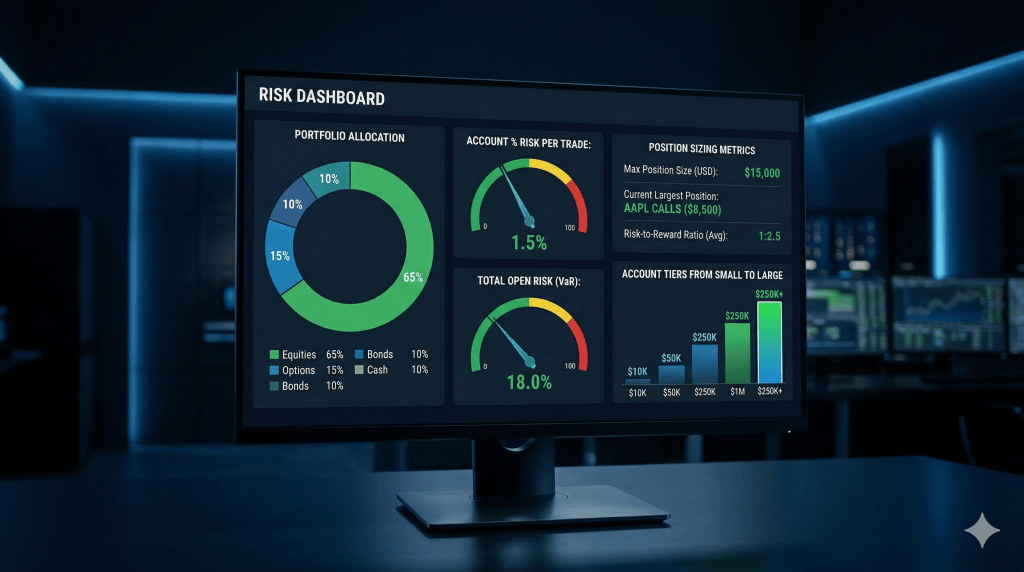
Strict Position Sizing Rules
Because 0DTE options can go to zero in hours, your position sizing must account for the possibility of total premium loss on any given trade. A general guideline:
- Risk no more than 1–2% of your total account on a single 0DTE trade
- For a USD 25,000 account, that means no more than USD 250–500 per 0DTE position
- Never increase position size to “recover” after a losing trade
Fast Alert Delivery and Execution
If you are following a trade alert service for 0DTE setups, the delivery speed of alerts is critical. An alert that arrives 5–10 minutes after the entry window has passed is not just useless — it creates pressure to chase a trade that has already moved. Ensure your alert service delivers via a fast channel (Discord is the standard) and that members can realistically execute at or near the alerted price.
Emotional Discipline
This is not a cliché. 0DTE trading will test your discipline more than almost any other trading format. Having pre-defined rules for every scenario — what you do if the trade moves against you immediately, how long you hold a winning position, when you walk away for the day — and following them without exception is what separates profitable 0DTE traders from those who blow up accounts.
Who Should and Should Not Trade 0DTE Options
0DTE May Be Appropriate If:
- You have at least 6–12 months of experience trading weekly index options profitably
- You have a defined, tested methodology with clear entry and exit rules
- Your account is large enough to size 0DTE positions at 1–2% risk without it being an insignificant dollar amount
- You can monitor positions actively during market hours
- You have the emotional discipline to follow your rules under pressure
0DTE Is Not Appropriate If:
- You are new to options trading or have less than 6 months of experience
- You do not have a defined methodology — you are trading on feel, news, or social media
- Your account is under USD 10,000 and 1–2% position sizing would be under USD 100–200 per trade (too small for meaningful SPX 0DTE exposure)
- You cannot monitor positions actively during market hours
- You have a history of overriding your own rules when under pressure
How to Approach 0DTE Using Supply and Demand Zones
For traders who are ready to trade 0DTE setups, supply and demand zone analysis provides one of the cleanest frameworks for identifying entries and managing positions within a single session.
The core approach:
- Pre-market preparation — Identify key daily and 4-hour supply and demand zones on SPX before the open. Know exactly which zones are in play for today’s session.
- Wait for price to approach a zone — Do not anticipate. Let price come to your level. Chasing 0DTE setups is one of the fastest ways to lose premium.
- Look for confirmation — A rejection candle, a bullish or bearish engulfing pattern, or a strong close off the zone extremes. Enter only on confirmation, not on the touch.
- Define your exit before you enter — Know your target (next opposing zone) and your invalidation level (close outside the zone) before the trade is placed.
- Manage actively — Take partial profits at the midpoint between your zone and target. Do not let a winning 0DTE trade turn into a loss by holding too long.
- Stop trading after two losses — A daily loss limit of two stopped-out trades prevents one bad session from becoming a catastrophic one.
How Blueville Capital Handles 0DTE Setups
At Blueville Capital, 0DTE setups are part of our daily alert coverage — but we are deliberate about when and why we issue them. Not every trading day produces a high-quality 0DTE setup. On days when the market is choppy, range-bound without clear zone interaction, or facing a major macro event that distorts normal price action, we will not force a 0DTE alert.
When a genuine 0DTE setup appears — price approaching a clean daily supply or demand zone on SPX with clear confirmation criteria — members receive a live alert with the specific contract details, entry area, target, and invalidation level. Post-trade reviews explain what worked, what did not, and why.
For members who want to understand 0DTE mechanics at a deeper level — including how to read gamma behavior at key zones, how to size positions for 0DTE specifically, and how to manage the psychological pressure of same-day expiration — our one-on-one mentorship program covers all of it in detail.
Our published trade history includes 0DTE results transparently — wins and losses — so you can evaluate the quality of our setups before committing to a membership.
👉 blueville.capital
FAQs
Q: What does 0DTE mean in options trading? A: 0DTE stands for zero days to expiration. A 0DTE option is a contract that expires on the same trading day it is purchased. The position must be closed or it expires — either in the money (profitable) or out of the money (worthless) — by the end of the trading session.
Q: Are 0DTE options good for beginners? A: No. 0DTE options are not appropriate for beginners. The compressed timeframe, extreme gamma sensitivity, and rapid theta decay require a solid foundation in options mechanics and significant experience managing weekly or monthly options positions first. Beginners should start with weekly options and build their skills before attempting 0DTE trading.
Q: How much of SPX options volume is 0DTE in 2026? A: By early 2026, 0DTE contracts account for approximately 59% of all SPX options volume on any given trading day, making them the dominant format in the S&P 500 index options market. ainvest.com
Q: What is the biggest risk of 0DTE options? A: The biggest risk is rapid total loss of premium. Because 0DTE options expire the same day, an out-of-the-money position at the close is worth exactly zero. There is no next session to recover. This makes position sizing and defined entry/exit rules even more critical than in longer-dated options trading.
Q: What account size do I need for 0DTE options trading? A: A general guideline is to risk no more than 1–2% of your account per 0DTE trade. For SPX 0DTE options where premiums can range from USD 200 to USD 2,000+ per contract, an account of at least USD 15,000–USD 25,000 is needed to size positions responsibly. Smaller accounts are better served by SPY 0DTE options with lower per-contract premiums.
Q: Can I use supply and demand zones for 0DTE trading? A: Yes — supply and demand zone analysis is one of the most effective frameworks for 0DTE trading because it gives you specific, pre-defined price levels to watch, clear confirmation criteria, and defined targets. This removes the reactive, emotional decision-making that kills most 0DTE traders.
Q: Does Blueville Capital issue 0DTE alerts? A: Yes. Blueville Capital issues 0DTE alerts on SPX when a genuine high-probability setup appears at a key supply or demand zone. We do not force 0DTE alerts on days where the setup quality does not meet our criteria. All 0DTE results are included in our published trade history.
Conclusion
0DTE options are one of the most powerful and most dangerous instruments available to retail traders in 2026. The potential for large percentage gains in a single session is real. So is the potential for rapid total loss of your entire premium.
The traders who succeed with 0DTE are not the ones who trade it the most. They are the ones who have built a solid foundation in weekly options first, developed a defined and tested methodology, and have the emotional discipline to follow their rules under pressure — every single session.
If you are not there yet, the best thing you can do for your account is to spend more time with weekly options, study the supply and demand zones that drive index price action, and let your skills develop before the clock starts ticking.
When you are ready to take that next step, Blueville Capital’s daily alerts — including 0DTE setups on SPX when the conditions are right — give you a transparent, methodology-driven starting point backed by a published trade history you can evaluate before you ever subscribe.
👉 blueville.capital
Disclaimer: Options trading involves significant financial risk and is not suitable for all investors. Past performance does not guarantee future results. This article is for educational purposes only and does not constitute financial or investment advice. All references to targeting specific percentage gains reflect potential setups based on historical zone analysis and are not guarantees of any specific return. Always conduct your own research and consult a licensed financial advisor before making trading decisions.