If you’ve been watching experienced traders rack up 50%, 100%, or even 200% gains on index options and wondered how they do it — this guide is for you.
SPX options are one of the most actively traded derivatives in the world. They offer unique tax advantages, deep liquidity, and daily expiration cycles that make them a favorite among professional and retail traders alike. But they’re also unforgiving if you don’t understand the mechanics.
This guide breaks down everything a beginner needs to know to start trading SPX options intelligently in 2026.
What Are SPX Options?
SPX options are contracts based on the S&P 500 Index — the benchmark index tracking the 500 largest publicly traded companies in the United States.
Unlike stock options, SPX options are cash-settled, meaning no shares change hands at expiration. Instead, the difference between the strike price and the index value is paid out in cash. This makes them cleaner and simpler to manage at expiration.
Key facts about SPX options:
- Underlying: S&P 500 Index (not an ETF)
- Settlement: Cash-settled (European style — no early assignment risk)
- Multiplier: Each contract represents USD 100 per point
- Expirations: Daily (Monday, Wednesday, Friday), weekly, and monthly
- Trading hours: Extended hours available (up to 15 hours per day)
SPX vs SPY: What’s the Difference?
This is one of the first questions every new index options trader asks. Both track the S&P 500, but there are important differences:
SPX (S&P 500 Index Options)
- Cash-settled, European style (no early assignment)
- Contract size ~10x larger than SPY
- Qualifies for 60/40 tax treatment under Section 1256 (60% long-term, 40% short-term capital gains regardless of holding period)
- Higher premium per contract, better for larger accounts
SPY (S&P 500 ETF Options)
- Share-settled, American style (early assignment risk)
- Smaller contract size, better for smaller accounts
- Standard capital gains tax treatment
- More flexible for certain strategies
Bottom line: If your account is USD 25K or larger and you’re focused on directional trades, SPX is generally the better vehicle. For accounts under USD 25K or for spread strategies, SPY offers more flexibility.
Understanding Strikes, Expirations, and Premium
Before placing your first SPX trade, you need to understand three core concepts:
Strikes
The strike price is the price at which you have the right to buy (call) or sell (put) the index. When you buy an SPX call at a 5,200 strike and the index moves to 5,250, your option is in-the-money by 50 points — worth USD 5,000 per contract.
Expirations
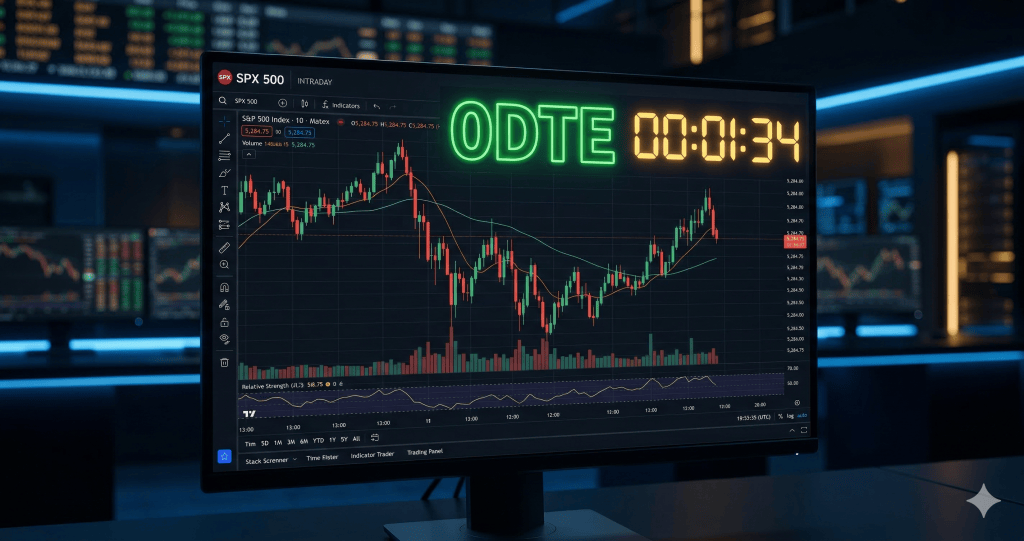
SPX now offers daily expirations (0DTE — zero days to expiration), weekly, and monthly contracts. 0DTE options are extremely popular because of their high gamma sensitivity, meaning small moves in the index can produce large percentage gains quickly.
⚠️ 0DTE Warning for Beginners: 0DTE options can expire completely worthless within hours. They are high-risk instruments and should not be your starting point. Learn weekly and monthly options first.
Premium
Premium is the price you pay for the option contract. It’s made up of:
- Intrinsic value — how far in-the-money the option is
- Extrinsic value (time value) — time remaining and implied volatility
As expiration approaches, extrinsic value decays (this is called theta decay). Buyers of options fight theta decay every day they hold a position.
How Supply and Demand Analysis Applies to SPX
Most retail traders rely on indicators like RSI, MACD, or moving averages to time their entries. Experienced index options traders use supply and demand zone analysis instead — and for good reason.
Supply and demand zones identify areas on a chart where institutional buyers or sellers previously entered the market in size. When price returns to these zones, there is a high probability of a significant reaction — making them ideal entry points for options trades.
Here’s how to apply it to SPX:
- Identify the higher timeframe trend (daily/weekly chart) — are we in a bullish or bearish structure?
- Mark key supply zones (areas where price previously dropped sharply from) and demand zones (areas where price previously surged from)
- Drop to a lower timeframe (15-minute or 1-hour) to look for confirmation when price approaches a zone
- Enter the option (call at demand, put at supply) when confirmation appears
- Target 50%+ gain on the option premium or use a defined price target based on the next zone
This is the core methodology used at Blueville Capital — combining supply and demand precision with daily SPX/RUT/SPY/IWM setups to consistently target 50%+ gains per trade.
How to Size Your First SPX Trade
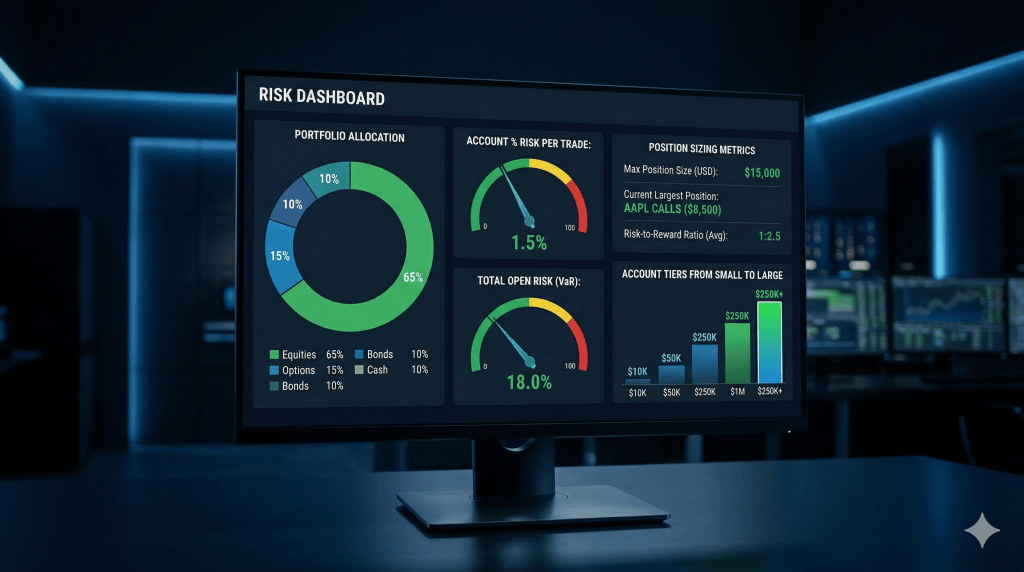
Position sizing is where most beginners make their biggest mistakes. Here’s a simple framework by account size:
USD 5,000 – USD 15,000 account:
- Trade SPY options instead of SPX (smaller contract size)
- Risk no more than 2–3% of account per trade (USD 100–USD 450)
- Start with 1 contract at a time
USD 15,000 – USD 50,000 account:
- SPX or SPY options both work
- Risk no more than 2% per trade (USD 300–USD 1,000)
- 1–2 contracts per trade maximum while learning
USD 50,000 – USD 200,000 account:
- SPX options are the primary vehicle
- Risk 1–2% per trade (USD 500–USD 4,000)
- Scale up gradually as your win rate confirms
Universal rule: Never risk more than you are comfortable losing entirely on a single trade. Options can go to zero.
Common Beginner Mistakes to Avoid
- Trading 0DTE before mastering weekly options — 0DTE requires fast decision-making and a deep understanding of gamma. Start with weekly expirations.
- Buying options that are too far out of the money — cheap options are cheap for a reason. They need a massive move to become profitable.
- Ignoring implied volatility — buying options when IV is high means you’re overpaying for premium. Learn to check VIX before entering.
- Overtrading — more trades does not mean more profits. The best setups are rare. Wait for high-conviction entries.
- No defined exit plan — decide your profit target and stop loss before you enter. Emotional decisions during a trade almost always end badly.
- Sizing too large too early — one bad trade can wipe out weeks of gains if you’re over-leveraged.
How Trade Alerts Accelerate Your Learning
One of the fastest ways to compress your learning curve as a new options trader is to follow along with an experienced trader’s alerts in real time.
A good trade alert service does more than just send you entry and exit prices — it explains why the trade was taken, what the setup looked like, and what the risk parameters are. Over time, pattern recognition develops naturally.
At Blueville Capital, every trade alert includes:
- The specific setup and reasoning behind the trade
- Entry price, target, and suggested position size
- Real-time updates as the trade develops
- Post-trade review so you understand what worked and why
This is fundamentally different from copy-trading. The goal is to make you a better, more independent trader — not to create dependency on alerts.
👉 http://bluevilledotcapital.wpcomstaging.com
Frequently Asked Questions
Q: Can I trade SPX options with a small account? A: SPX options require a larger account due to their contract size. If you have under USD 25K, start with SPY options which offer smaller contract sizes and similar exposure.
Q: What is the best time of day to trade SPX options? A: The first 30 minutes (9:30–10:00 AM EST) and the last hour (3:00–4:00 PM EST) tend to offer the most volatility and opportunity. Midday is typically slow and choppy.
Q: How much can I realistically make trading SPX options? A: Returns vary widely based on skill, account size, and risk management. Consistently targeting 50%+ per winning trade with a solid win rate can compound significantly over time — but losses are equally possible. Focus on the process, not the dollar amount.
Q: What is the tax advantage of SPX options? A: SPX options qualify for Section 1256 treatment — 60% of gains are taxed as long-term capital gains and 40% as short-term, regardless of how long you held the position. Consult a tax professional for your specific situation.
Q: Do I need Level 3 options approval to trade SPX? A: You typically need at least Level 2 options approval (buying calls and puts) to trade SPX options. Some brokers may require Level 3 for spreads. Check with your broker.
Q: What broker is best for SPX options trading? A: Popular choices among active index options traders include Tastytrade, TD Ameritrade (thinkorswim), Interactive Brokers, and Schwab. Look for low per-contract fees and a robust charting platform.
Q: Is Blueville Capital good for beginners? A: Yes — Blueville Capital offers membership tiers starting at the Base level, designed specifically for traders who are learning. The combination of daily alerts and one-on-one mentorship options makes it one of the more beginner-friendly services in the index options space.
Final Thoughts
SPX options trading is genuinely one of the most powerful wealth-building vehicles available to retail traders — but only when approached with discipline, proper education, and a structured methodology.
Start with the fundamentals. Learn supply and demand. Size your trades conservatively. And consider following along with an experienced trader’s alerts while you develop your own edge.
When you’re ready to take your trading to the next level, Blueville Capital offers daily SPX, RUT, SPY, and IWM setups targeting 50%+ gains — backed by a transparent trade history and a community of active traders.
👉 https://bluevilledotcapital.wpcomstaging.com
Disclaimer: Options trading involves significant risk and is not suitable for all investors. Past performance is not indicative of future results. This article is for educational purposes only and does not constitute financial advice.